
A smart home device is any gadget that connects to your phone, voice assistant, or other devices so you can control it remotely or set it to run on its own. In 2026, smart homes feel much easier to start because apps are better, voice control is smoother, and Matter helps more brands work together.
You also don't need a fully automated house to get real value. One speaker, a few lights, or a smart doorbell can make daily life simpler, safer, and more energy-aware.
Start with the basics: how a smart home works
Most smart homes run on a few simple parts: devices, an app, Wi-Fi, and usually a voice assistant. Some setups also use a hub, but many beginner devices now connect straight to your home network or a smart speaker.
Your first big decision is the ecosystem. That means the platform you build around, usually Amazon Alexa, Google Home, or Apple Home. That choice shapes what works best later, especially if you want routines, shared controls, and fewer setup headaches.
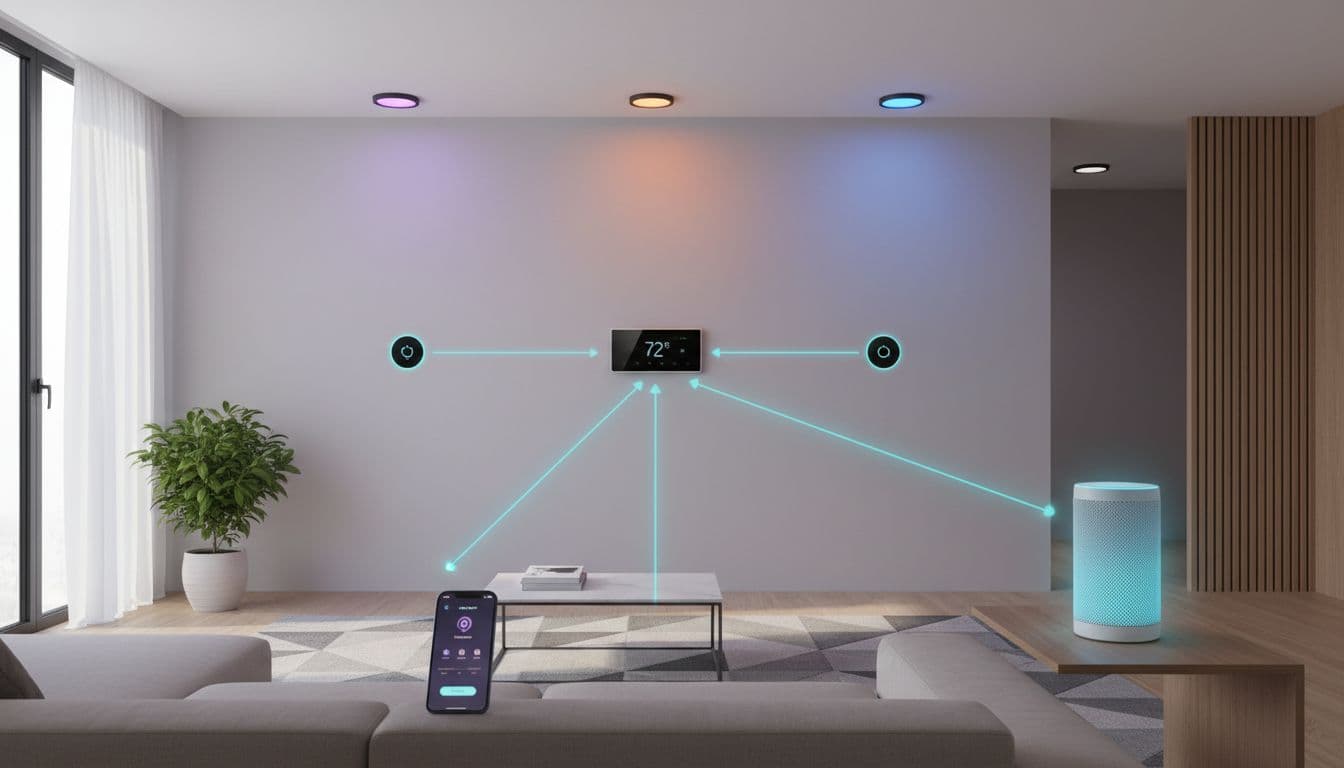
Choose an ecosystem that fits your phone, habits, and budget
Alexa is often the easiest pick if you want the widest device choice. It works with a huge range of lights, plugs, cameras, and displays, and entry prices are usually low.
Google Home is a strong fit if you use Android, Google Calendar, or Google Assistant every day. Voice requests often feel more natural, which matters when you want quick answers or easy room control.
Apple Home makes sense for iPhone users who care most about privacy and clean setup. If your home already runs on Apple devices, a HomePod mini can feel simple from day one.
Look for Matter support before you buy
Matter is the shared language that helps devices from different brands work together. For beginners, that means easier setup, more flexibility, and less risk of buying something that only works in one app.
Check the product box or listing for Matter support before you buy. If you see "Thread border router" in the fine print, don't panic. Many newer speakers and displays already include that support. For a plain-English breakdown, this Matter and Thread guide explains what the labels mean.
The best smart home devices to buy first
The best first smart home device is the one you'll use every day. Skip the urge to buy ten gadgets at once. A few well-chosen devices will teach you more than a giant bundle sitting half-set-up in a box.
Start with a smart speaker or display as your control center
A smart speaker or display is often the easiest first purchase because it gives you one place to control everything. You can set timers, play music, start routines, turn off lights, and check the weather without opening five apps.
The Apple HomePod mini is a good match for Apple homes. The Google Nest Hub Max works well if you like Google services and want a screen. The Amazon Echo Show 8 is a practical middle ground for voice control, video, and broad device support.
Expect about $50 to $150 for a speaker, and roughly $100 to $230 for a display. For many beginners, that single device becomes the remote control for the whole house.
Add smart lights, plugs, and a thermostat for everyday convenience
Smart lights are popular for a reason. They solve small daily annoyances right away. You can dim the living room from bed, set porch lights on a schedule, or turn lamps on at sunset.
Philips Hue remains a well-known option because it's reliable and easy to expand. Still, you don't have to start there. A couple of Matter-ready bulbs can be a low-cost way in, often around $15 to $50 each.
Smart plugs are even simpler. Plug one into a wall outlet, connect a lamp or fan, and you've turned a regular device into a smart one. Most smart plugs land around $15 to $30 each.
Thermostats cost more, often $100 to $250 before installation, but they can offer stronger long-term value. Nest and Ecobee are still top beginner-friendly names because scheduling and app control are easy to understand. If you want to compare current options, these tested smart home devices for 2026 are a useful place to browse.
Choose smart security devices if safety is your top priority
If home security matters most, start at the front door. A smart video doorbell, such as a Ring model, can send motion alerts, show live video, and let you talk to visitors from your phone.
Smart cameras add another layer, especially for garages, backyards, and entryways. Smart locks go a step further with keyless access, guest codes, and auto-lock features.
Check subscription costs before checkout. A cheaper camera or doorbell can cost more over time if video storage requires a monthly plan.
How to set up your smart home without wasting money
A practical starter setup often lands around $300 to $600. That budget can cover a speaker or display, a few lights or plugs, and either a thermostat or a video doorbell. That's enough to make your home feel smarter without turning setup into a part-time job.
Buy one or two devices first, then build room by room
Start with one clear need. Maybe you want better bedroom lighting, hands-free kitchen timers, or front-door alerts while you're away. That single goal keeps you from buying gear you won't use.
Next, check your Wi-Fi where the device will live. Weak signal is one of the fastest ways to get frustrated. Then add devices room by room so you can spot what works, what doesn't, and what you want next. If you're still deciding on a platform, this 2026 ecosystem comparison can help you narrow it down.
Make security part of your setup from day one
Use strong passwords, turn on two-factor authentication, and install updates when they appear. Those three habits matter more than any fancy feature.
Privacy also deserves a quick look before you buy. That matters most with cameras, locks, and doorbells. Stick with brands that explain their policies clearly and have a solid track record.
Start small and let your home grow
The best smart home isn't the biggest one. It's the one that fixes real problems in your daily routine.
Pick an ecosystem, buy one useful device, and expand over time. In 2026, smart home devices are more beginner-friendly, more flexible, and much easier to grow than they were a few years ago.