Wednesday, March 11, 2026

Best Free Apps Every Student Should Use in 2026

Best Free Apps Every Student Should Use in 2026

Best Free Apps Every Student Should Use in 2026

Did you know students now spend over five hours daily on mobile devices for school? Your phone is now a powerful academic powerhouse for modern learners. It helps you do better in school.

best free apps every student should use in 2026

We think you can do well in school without spending a lot. That's why we're looking at the best free apps for 2026. These apps help you manage your time and grades better.

Start today with us and learn everyday. See how digital tools can change your routine. These tools help you stay organized and focused on important things.

Using these tools, you can focus on your future without worrying about money. We'll show you the latest tech that makes learning easier. Let's explore the tools that will help you succeed in school.

Key Takeaways

  • Discover mobile tools that cost nothing for your daily studies.
  • Improve organization through sophisticated digital calendars and planners.
  • Boost productivity with smart note-taking software and automation.
  • Enhance collaboration with seamless cloud-based sharing features.
  • Achieve academic goals without spending money on expensive licenses.
  • Simplify study habits using modern technology and intuitive interfaces.

Why We Recommend These Essential Student Apps for 2026

We're excited to share our top picks for free student apps in 2026. These tools help students be more productive and do well in school. We want to help students use the best technology.

We looked at many apps to find the best ones. We checked their features, what users say, and if they meet different student needs.

"Technology will continue to shape the way we learn and teach. The right tools can make a big difference in a student's learning and goals."

We analyzed many apps to see if they help students learn better and do school work easier. We chose apps that are easy to use and work well for everyone.

App Category Key Features User Reviews
Note-Taking Apps Organization, tagging, and search functionality 4.5/5
Productivity Apps Task management, reminders, and focus-enhancing tools 4.7/5
Study and Learning Apps Interactive content, quizzes, and progress tracking 4.8/5

By starting today, students can use these free student apps 2026 and learn every day. We think the right tech can really improve school life.

recommended student apps 2026

Our picks are a good start for students wanting to use tech in their studies. By trying these apps, students can find new ways to stay organized and reach their goals.

Best Free Apps Every Student Should Use in 2026

In 2026, students have many free apps to help them learn. It's hard to pick the best ones. We'll look at the must-have student apps 2026 that can really help with school.

Note-Taking and Organization Apps

Good note-taking and staying organized are key for doing well in school. Here are some top picks:

Notion

Notion is a workspace app for students. It lets you take notes, make databases, and organize tasks. It's very flexible and customizable.

Microsoft OneNote

Microsoft OneNote is a great app for taking notes. It helps you keep all your notes and research in one place. It's great for working on projects with others.

Productivity and Time Management Apps

Managing your time well is important for school. Here are some apps that can help:

Todoist

Todoist is a task app that helps you stay on track. It lets you set priorities and reminders. It's very easy to use.

Forest

Forest is a unique app that helps you stay focused. It grows a virtual forest as you work. It helps you avoid distractions.

Study and Learning Apps

Using the right apps can help you learn better. Here are some top choices:

Quizlet

Quizlet is a study app with flashcards, tests, and games. It's perfect for getting ready for exams.

Khan Academy

Khan Academy offers free learning resources in many subjects. It's a great place for extra help.

Collaboration and Communication Apps

Working together is important in school. These apps help with teamwork and talking to each other:

Google Drive

Google Drive is a cloud storage app. It lets you store, share, and work on documents together.

Slack

Slack is a platform for teams to communicate. It has channels, direct messages, and file sharing. It's great for group projects.

Here's a quick look at what these apps offer:

App Category Key Features
Notion Note-Taking & Organization All-in-one workspace, customizable
Todoist Productivity & Time Management Task management, prioritization, reminders
Quizlet Study & Learning Flashcards, tests, study games
Google Drive Collaboration & Communication Cloud storage, file sharing, collaboration tools
essential student apps 2026

Using these essential student apps 2026 every day can really improve your school work. Start using them today and make learning a part of your daily life.

How to Get Started with These Must-Have Student Apps Today

To make the most of these apps, follow our easy guide. It will help you use them every day.

Step 1: Identify Your Academic Needs

First, figure out what you need help with. Do you struggle with notes, time, or working with friends? Popular student apps in 2026 can help with many things.

Write down what you need help with. Maybe you want better grades or study skills.

Step 2: Download and Set Up Your Core Apps

After knowing what you need, download the right apps. For notes and organization, try Evernote or OneNote. For staying on track, use Trello or Todoist.

Here's a simple table to help you get started with some of the most popular student apps 2026:

App Category Recommended Apps Primary Use
Note-Taking Evernote, OneNote Organizing notes and research
Productivity Trello, Todoist Managing tasks and time
Collaboration Slack, Microsoft Teams Team projects and communication

Step 3: Integrate Apps into Your Daily Routine

Once you've set up your apps, use them every day. Start by checking your tasks on Todoist or Trello in the morning.

popular student apps 2026

Be consistent. Make using these apps a part of your daily plan. Soon, you'll see how much they help you learn and stay productive.

Begin today and learn every day. By following these steps and using the popular student apps 2026, you'll do great in school.

Conclusion

Exploring the top-rated student apps 2026 shows how they can improve your school life. These free apps help you take better notes, work smarter, and team up with friends.

It's time to start using these cool tools. Find out what you need, download the best apps, and use them every day. With the right apps, you can reach your goals and keep learning.

Using these apps will make your school year better. You'll be more organized, productive, and successful. Don't wait to try these apps. Start now and find a new way to learn and succeed.

FAQ

Which are the best free apps every student should use in 2026 to stay organized?

Start with Notion and Microsoft OneNote. They let us keep our notes everywhere. This helps us stay organized and do well in school.

Why do you consider these the most essential student apps 2026 has to offer?

These apps tackle today's digital learning challenges. Todoist and Slack help us stay on track. They make learning easier.

What are the top student apps 2026 for improving focus during study sessions?

Use Forest for focus. It turns staying off your phone into a game. Pair it with Todoist for better study habits.

Are there any specific recommended student apps 2026 for collaborative group projects?

Yes! Google Drive and Slack are great for teamwork. They help us work together smoothly.

Which must-have student apps 2026 are best for exam preparation?

Don't forget Quizlet and Khan Academy. They have flashcards and video tutorials. Start using them to learn every day.

How can we find the most popular student apps 2026 for free?

Look for free versions of Notion and Microsoft OneNote. Many apps offer deals for students. This way, you get great tools without spending money.

What makes these the top-rated student apps 2026 for academic success?

They're top-rated because they're easy to use and reliable. Khan Academy and Google Drive are leaders for a reason.

How do we get started with these free student apps 2026 today?

First, figure out what you need help with. Then, download Todoist or Notion. Plan your week and start improving your productivity today!

How to Learn Digital Marketing Skills Online for Free (and Get Job-Ready)

If you've ever watched a brand pop up everywhere and thought, "How do they do that?", you're already thinking like a marketer. The good news is you can learn digital marketing skills online for free and build real, job-ready ability in 30 to 60 days, if you follow a simple plan.

"Digital marketing skills" isn't one thing. It's a set of practical skills, like SEO, content writing, social media, email marketing, paid ads, and analytics. You don't need to learn them all at once. You need a path, a few trusted platforms, and a way to practice.

Below you'll get a step-by-step learning path, the best free places to learn (HubSpot Academy, Google Grow, Semrush Academy, Digital Marketing Institute, and more), plus mini projects that create proof of your skills.

Start with a simple free learning path (and finish it)

Most beginners don't fail because the content is hard. They fail because they bounce between courses like TV channels. Instead, use a four-step path and stick to it for one month.

First, pick a clear goal. Next, learn the basics. Then practice small tasks right away. Finally, package the work so others can see it.

Here's the path:

  1. Choose one outcome (job skill, business growth, or side income)
  2. Learn the basics (one structured course, start to finish)
  3. Practice weekly (tiny tasks that match what you learned)
  4. Prove it (a simple portfolio with screenshots and short write-ups)

A simple weekly schedule keeps you moving without burnout: 5 days a week, 30 to 45 minutes. On busy weeks, do 20 minutes and keep the streak alive. Consistency beats marathon sessions because you're training a habit, not cramming for a test.

A young professional sits attentively at a clean desk in a sunny home office, with an open laptop displaying a blurred online learning dashboard, notebook with bullet points, water glass, and plant nearby.

Pick one goal first: get a job skill, grow a business, or build a side hustle

Your goal decides what to learn first, so don't skip this step.

If you want a job-ready generalist path, start with marketing fundamentals and analytics. Employers love people who can write, publish, and measure results. If you're growing a small local business, focus on local SEO, a Google Business Profile mindset, social posting, and email follow-ups. If you're aiming for e-commerce, start with product pages, email flows, and beginner ads.

A quick self-check helps you choose faster. What do you enjoy most: writing, design, data, or sales? Your answer doesn't lock you in forever, it just gives you a strong starting lane.

Use the "learn, do, share" method to stay motivated

Think of skill-building like going to the gym. Reading about workouts doesn't build muscle, doing reps does. Use this loop:

  • Learn one short lesson
  • Do one tiny task within 15 minutes
  • Share proof in a doc, Notion page, or LinkedIn post

If you can't show what you learned, you probably didn't practice it yet.

Here are five easy practice ideas you can repeat every week:

  • Keyword list: pick a topic and draft 15 search terms people might use
  • One ad draft: write a headline and description for a made-up offer
  • One email: create a welcome email with a clear subject line and one call-to-action
  • Content outline: map one blog post with headings and key points
  • Analytics check: explain what sessions, clicks, and conversions mean in plain English

Keep tasks small on purpose. Small tasks create wins, and wins keep you going.

The best free places to learn digital marketing online in 2026

In March 2026, you can get strong training for free from a handful of trusted platforms. The trick is to use each one for what it does best, instead of trying to "collect" courses.

Some courses are free with certificates. Others are free to audit, but charge for a certificate. That's still useful because your skills come from practice, not a PDF. Still, if you want rΓ©sumΓ©-friendly proof, start with platforms that issue free certifications.

Free courses with certificates that look good on resumes

HubSpot Academy is a great first stop for beginners because it's clear and practical. Its free Digital Marketing Certification covers core channels, including SEO, social, email, content, lead generation, and measurement. It's best for people who want a broad foundation fast.

Google Grow (including Google's "Fundamentals of Digital Marketing" training) is a solid choice when you want more depth and a widely recognized credential. You'll cover web presence, search, local marketing concepts, content, email, video, analytics, and e-commerce basics. Google also offers separate training paths for Google Ads and Google Analytics, which helps when you want a specific skill.

Semrush Academy fits well after you know the basics. It's strongest for SEO and content marketing workflows, like keyword research, content planning, and improving pages. It's best for writers, SEOs, and anyone who wants to grow traffic without relying only on ads.

A simple order that works: start with HubSpot or Google, then add Semrush when you're ready to specialize.

Free skill boosters for specific channels (design, email, quick lessons)

Sometimes you don't need a long course, you need a boost for one channel.

The Digital Marketing Institute offers short lessons that can help you sharpen areas like social, analytics, AI-related marketing tasks, and PPC concepts. Canva Design School helps you make better visuals for social and ads, even if you "aren't a designer." For email, Omnisend Academy is a focused way to learn email basics and automation logic. If SEO writing is your weak spot, Yoast has free SEO copywriting resources that make on-page writing feel less mysterious.

A simple rule: pair one structured "foundation" course with one booster. Then apply what you learn the same week.

Practice for free, build proof, and turn it into opportunities

Courses teach the "what." Practice teaches the "how." If you want opportunities, you need proof. That proof can come from a project you run at home with no budget.

Pick one mini project, track a few basic metrics, and document what you did. Even small numbers count if your process is clear. When someone asks, "Have you done this before?", you can answer with a link.

Do one mini project that uses 3 core skills: content, traffic, and tracking

Choose one project that hits three pillars: create content, drive traffic, then measure results.

  1. Simple site + 2 SEO posts: start a basic blog or Notion page, publish two search-focused posts, and optimize titles and headings.
  2. 7-day social plan: write a one-week posting plan, design simple Canva graphics, and track impressions or profile visits.
  3. Email welcome series: create a 3 to 5-email welcome flow for a pretend store, including a subject line and call-to-action.

What should you measure? Keep it simple: clicks, opens, impressions, or sessions. Then take screenshots, note dates, and write a short "what changed" summary. Clear documentation builds trust, even if the project is small.

Create a beginner portfolio in one afternoon (no fancy website needed)

A beginner portfolio can live in a Google Doc, a Notion page, or a simple free site builder. The format matters less than the clarity.

Include a short bio, the skills you practiced, links to your work, and screenshots of results. Add a short "what I learned" section for each project, because reflection shows real understanding. For credibility, attach your course certificates, completion badges, and one mini case study write-up (problem, steps, outcome).

Make it easy for someone to skim in two minutes. If they can "get it" fast, they're more likely to reply.

Conclusion

Learning digital marketing for free works when you stop collecting lessons and start collecting proof. Quick checklist: pick a goal, finish one certificate course (HubSpot Academy or Google Grow), add a specialization with Semrush Academy, complete one mini project, then publish a simple portfolio.

Now choose one course and schedule your first 30 minutes today. Put it on your calendar like an appointment. In a month, you won't just "know" digital marketing, you'll have receipts that show it. What will your first mini project be?

10 Online Jobs African Students Can Do From Home in 2026

 If you're an African student, you've probably asked yourself: can I earn online without dropping my grades? The good news is yes, and you don't need a fancy setup to start.

In 2026, more remote roles fit student schedules, from simple task-based work to higher-paying freelance skills. Still, real life can get in the way. Data can be expensive, power cuts can ruin deadlines, and getting paid across borders can feel like a maze.

This guide breaks down 10 legit online jobs you can do from home, plus practical tips for getting hired, getting paid, and avoiding scams.

The 10 best online jobs you can start from home as an African student

Entry level jobs you can start fast

These are best if you need income quickly and you're still building confidence. A headset, a quiet corner, and a reliable charging plan go a long way. If you work with US clients, night shifts can be normal, so plan sleep like it's a class.

A focused African university student works on a laptop for a remote job in a cozy dorm room with a simple wooden desk, power bank, phone hotspot, and natural daylight from the window.

Here are four online jobs African students can start with beginner skills:

Online jobWhat you doWhat you need to startBeginner earning rangeWhere to find work
Virtual assistant (VA)Help with email, scheduling, research, and admin tasksGood English, Google Docs, consistent communication$5 to $15 per hourRemote4Africa job board
Data entryEnter, clean, or organize data in spreadsheets or toolsTyping speed, accuracy, basic Excel or Sheets$3 to $8 per hourToloka
Customer support (chat or calls)Reply to customer questions by chat, email, or phoneHeadset, stable connection, calm attitude$8 to $20 per hourIndeed
Content moderationReview posts or listings to follow platform rulesStrong focus, ability to follow guidelines$6 to $15 per hourModSquad

Takeaway: if your internet is unstable, start with VA or data entry first, since they often need less video time than support calls.

Skill based jobs that pay more as you improve

These jobs can start small, then grow into real monthly income. Think of them like a gym routine. Early sessions feel light, but consistency builds strength and pay.

To learn fast for free, use YouTube practice, class projects, and simple portfolio samples. For example, a one-page Google Doc article, three Canva posts, or a small spreadsheet dashboard can prove your ability.

A young African student tutors via video call on a laptop, sitting at a desk with notebook and headset in a bright room with bookshelves and warm lighting.

Here are five skill-based remote jobs that often pay better over time:

Online jobWhat you doWhat you need to startBeginner earning rangeWhere to find work
Online tutoringTeach English, math, or a subject you're strong inClear speaking, patience, a quiet space$10 to $25 per hourPreply
Freelance writingWrite blog posts, product descriptions, or scriptsSolid grammar, research skills, Google Docs$0.03 to $0.10 per wordUpwork
Social media managementPlan posts, reply to DMs, track growthContent sense, Canva, basic analytics$10 to $30 per hourLinkedIn
Graphic designCreate flyers, thumbnails, and brand assetsCanva or basic design skills, sample designs$10 to $25 per hourFiverr
Data analysis (junior)Clean and analyze data, build simple reportsGoogle Sheets, basic formulas, charts$8 to $20 per hourWellfound

As you grow, focus on one niche. "Tutor math for high school" wins faster than "I teach everything."

When it's time to receive money from global clients, compare payout options and fees early. This overview of freelancer payment platforms helps you understand common methods and what to watch for.

Quick side hustles for pocket money

This category won't replace a steady job, but it can pay for airtime, transport, or small bills. Be selective because some survey sites don't accept many African countries.

Online job categoryWhat you doWhat you need to startBeginner earning rangeWhere to find work
User testing and online surveysTest apps or answer surveys for rewardsGood attention to detail, clear feedback$5 to $20 per test, surveys usually lowerUserTesting

If you want a second option, TestingTime can also work, but availability depends on your country. Also, pick platforms that pay through gift cards, bank transfer, Wise, or Payoneer when possible.

How to get hired faster and actually get paid from Africa

The biggest mistake students make is trying five jobs at once. Instead, pick one or two options for the next 30 days, then commit. Your goal is to collect proof, not perfection.

Start with a tiny portfolio. For a VA, that can be a sample inbox sorting plan and a simple weekly calendar. For writing, publish two short articles in Google Docs. For design, create five social posts for a fake campus club. Keep it clean and easy to share.

Next, write a profile that sounds like a person. Mention your school schedule, your time zone, and your internet backup plan. Then apply daily. Even 20 minutes a day adds up if you send thoughtful proposals.

For payments, don't wait until you land a client. Set up what's available where you live. Payoneer and Wise often work across borders, while some sites offer direct bank transfer. Track fees so you don't lose earnings to charges.

A relaxed African student sits on a bed in a simple bedroom, checking smartphone notifications for freelance opportunities with a laptop nearby, bathed in soft evening light.

If your plan depends on "perfect electricity" or "cheap data," it's not a plan. Build a backup.

A simple setup that works on a student budget

You don't need a dream laptop. You need a setup that survives real life.

Basics:

  • A phone or laptop you can type on comfortably
  • A stable internet plan, plus a backup hotspot option
  • A power bank, or another backup power source you can recharge daily
  • Free tools like Google Drive (Docs, Sheets) and Canva

To save data, download lessons at night, compress images before upload, and work offline first, then upload in one batch.

Avoid common scams on freelance and remote job sites

Online job scams target students because money feels urgent. Protect your time and your identity.

Watch for red flags: anyone asking you to pay to get hired, "training fees," fake checks, or pressure to move to WhatsApp right away. Also avoid jobs that ask for sensitive bank details upfront, or refuse to write down terms.

A simple rule helps: stay on the platform until trust is built. Use escrow when possible, and keep agreements in writing. This guide on avoiding online job scams explains common tricks and how to spot them early.

Conclusion

Real online jobs for African students exist in 2026, and many can be done from home with basic tools. Start with entry-level work if you need speed, then build skills like tutoring, writing, design, or data for higher pay. Most importantly, plan for power cuts and payment limits before they disrupt you.

Choose one job today, create a one-page sample or mini portfolio, then apply to 5 gigs before you sleep. Do that for two weeks, and you'll be ahead of most beginners.

Top National Parks in East Africa to Visit for the June Holiday 2026

 June in East Africa feels like the outdoors finally turned the lights on. The long rains have eased, tracks start to dry, and animals gather closer to rivers and waterholes. Mornings can be chilly, afternoons stay pleasantly warm, and you often get fewer crowds than July.

Before you pay deposits, confirm entry fees

This guide keeps it simple, which parks to pick for big wildlife, Great Migration moments, and gorilla trekking during the June holiday 2026. If you're sharing plans with friends or a travel group,  so everyone can find the details quickly later.

Prices and rules change, sometimes with little notice. Before you pay deposits, confirm entry fees and permits on the official park authority websites (TANAPA, NCAA, KWS, UWA, and Rwanda Development Board). FOR BOOKING EMAIL US jumanjisaexplore@gmail.com

Why June is a smart month for East Africa safaris and treks

June sits at a sweet spot. It's the start of the dry season in many safari areas, so you get better roads and clearer views. As grasses thin out, animals are easier to spot, especially near water. That matters if it's your first safari and you don't want to spend hours searching.

Temperatures also help. Early drives can feel cold, then the day warms up fast. Because of that, you can stay comfortable without the heavy rain gear you'd need in April or May. Families usually find June easier, too. Kids handle game drives better when it's not humid, and the risk of weather delays drops.

Another plus is timing. July and August bring peak season pricing and peak season crowds. June can still book out, but it often gives you a calmer experience with more flexible lodge choices.

Wildlife viewing in June, what gets better and what to expect

June packing and planning basics that save stress


Game drives tend to run smoother because dirt roads are less muddy. Visibility improves as brush dries back, so you can scan farther across plains and along river edges. Predators often show more daytime activity than in hotter months, since they don't overheat as quickly.

Mosquitoes can also be fewer than in rainy periods, although you still need repellent. Keep expectations realistic, though. Nature doesn't follow a schedule.

Wildlife sightings are never guaranteed. The win in June is better odds, not certainty.

Responsible viewing matters even more when animals cluster near water. Stay on tracks, keep distance, and never feed wildlife.

June packing and planning basics that save stress

  • Light layers: Breathable shirts for midday heat.
  • Warm fleece: Early drives can feel cold on open vehicles.
  • Rain jacket: Early June can still bring short showers.
  • Binoculars: You'll spot more, and you'll rely less on the guide's eyes.
  • Sunscreen and lip balm: Dry air and high sun add up fast.
  • Insect repellent: Even in drier months, don't skip it.
  • Sturdy closed shoes: Dusty tracks and uneven lodge paths.
  • Small daypack: Water, snacks, camera, and a spare layer.

Book key lodges early if you want prime locations. Also use reputable guides, and re-check entry fees and permit rules close to departure.

The top East Africa parks to visit for the June 2026 holiday (and what makes each one special)

Each park below shines in June for a different reason. Pick based on your must-see moment, then build the rest around it.

Serengeti National Park, Tanzania: Great Migration buildup and Grumeti River drama

Best for: Big herds and classic safari scale.
In June, many migration herds push north toward the Western Corridor. That's when you might catch tense scenes near the Grumeti River, including crocodiles waiting in the bends. Meanwhile, Central Serengeti stays strong for lions, cheetahs, and leopards.

Top animals: Wildebeest, zebra, lion, cheetah, leopard, hyena.
Best June experience: Following herds in the west, then switching to central predator country.
How many days to plan: 3 to 4 days if you can. It reduces rushing and long drives.
Budget note: Entry often lands around $70 to $83 per adult per day for non-residents (sources vary), so confirm with TANAPA. A hot air balloon safari is a pricey splurge, but unforgettable.

Ngorongoro Crater, Tanzania: Big 5 chances in one epic day

Best for: A high-impact safari if your time is tight.
The crater packs wildlife into a dramatic natural bowl. In June, the air on the rim feels cool and clear, and visibility on the floor is often excellent. Lions are common, elephants appear year-round, and you may get lucky with black rhino.

Top animals: Lion, elephant, buffalo, hippo, hyena, sometimes black rhino.
Best June experience: An early descent for crisp light and active wildlife.
How many days to plan: 1 to 2 days, including rim time and the crater drive itself.
Budget note: Costs can jump because you pay conservation area entry plus crater-related vehicle fees. Roughly, expect about $70.80 per person for entry and an added around $295 per vehicle for the crater (confirm with NCAA).

Masai Mara National Reserve, Kenya: big cats, classic savanna, and fewer peak season crowds

Best June experience


Best for: Predator action and photogenic open plains.

June is excellent even before the biggest migration wave arrives. Resident herds support strong lion and cheetah sightings, and the wide landscapes make tracking easier. You'll also find softer crowd levels than late July, which helps at sightings.

Top animals: Lion, cheetah, leopard, elephant, buffalo, giraffe.
Best June experience: Long morning drives with clean horizons and golden light.
How many days to plan: 2 to 3 days for a relaxed pace.
Budget note: Fees vary by season and management. A practical planning range is $80 to $100 per non-resident adult per day, then confirm with official reserve channels before you book.

Amboseli National Park, Kenya: elephants and Mount Kilimanjaro views on clear June mornings

Best for: Elephants with a postcard backdrop.
Amboseli's elephant families are the headline. June mornings can bring clearer skies, which improves your odds of seeing Mount Kilimanjaro fully out. The park is also compact, so you can get great sightings without endless driving.

Top animals: Elephant, lion, hyena, zebra, wildebeest, plenty of birds.
Best June experience: Sunrise game drive, then elephants at the swamps as the day warms.
How many days to plan: 1 to 2 days, ideal as an add-on to a Kenya trip.
Budget note: Plan roughly around $60 per adult per day for entry, then confirm current rates and any vehicle charges.

Bwindi Impenetrable National Park, Uganda: gorilla trekking when trails are drier

Best for: A once-in-a-lifetime gorilla hour.
June is a strong trekking month because trails are often drier and less slippery than rainy periods. Trek day follows a clear rhythm: morning briefing, guided hike, then one hour near a gorilla family once you find them. The hike can still be steep, so pacing matters more than fitness myths.

Top animals: Mountain gorillas (plus forest monkeys and rich birdlife).
Best June experience: Cooler hiking weather and firmer footing in the forest.
How many days to plan: 2 to 3 days total, since travel time can be long and permits are fixed-date.
Budget note: Gorilla permits are limited and must be booked far ahead. Expect roughly about $700 to $800 per permit (often cited around $800, confirm with UWA), plus park entry and guide costs.

How to choose the right park for your June 2026 trip (quick match guide)

Start with your non-negotiable moment. A trip built around one clear goal feels calmer, and usually costs less. After that, add a second park that complements it, not competes with it.

Time matters as much as money. Tanzania's northern circuit combines well in one trip because distances are manageable. Kenya's highlights also pair nicely. Mixing countries is possible, but flights and border crossings can eat days if you're not careful.

Pick your trip style: migration, Big 5, gorillas, or a little of everything

If you want migration movement and huge horizons, go Serengeti first. Add Ngorongoro for a different feel and strong Big 5 chances in a single day. For Kenya classics, pair Masai Mara with Amboseli, which adds elephants and mountain views. If gorillas are the main reason you're going, build around Bwindi, then add a short savanna safari only if time allows.

Sample June 2026 itineraries that fit real vacation time

  • 7 days in Kenya: Fly in, 3 nights Masai Mara, then 2 nights Amboseli, travel day buffers.
  • 10 to 12 days Tanzania plus Uganda: 4 nights Serengeti, 2 nights Ngorongoro area, then Bwindi for 2 to 3 nights (plus flight connections).

Lock flights, key lodges, and permits early, especially for gorillas.

Conclusion

For the June holiday 2026, the strongest East Africa picks are Serengeti for migration buildup, Ngorongoro Crater for a high-impact Big 5 day, Masai Mara for cats and open plains, Amboseli for elephants and Kilimanjaro mornings, and Bwindi for gorilla trekking on drier trails. Choose your must-see experience first, then secure permits and the best-located lodges. Finally, keep it safe and respectful: listen to guides, follow park rules, and leave no trace.

Complete Travel Guide to Ethiopia for First-Time Visitors

Ethiopia can feel like several countries in one. You can drink coffee in a busy capital, then wake up among mountain cliffs, then end the week staring at churches carved from stone.

This complete travel guide to Ethiopia for first-time visitors keeps things simple. Ethiopia is big, many places sit at high altitude, and travel times often run longer than maps suggest. A smart first trip focuses on a few areas and builds in breathing room.

Below you'll get the basics (best time to go, visas, safety, health, money, and transport), plus an easy 7 to 10 day route built around Addis Ababa, Lalibela, the Simien Mountains, and an optional Danakil add-on.

Plan your trip basics, best time to visit, visa, safety, and health

When to visit Ethiopia, weather by region, and festival timing

For most first-time visitors, October to March is the easiest window. Roads are drier, skies are clearer, and trekking conditions improve in the northern highlands. In March 2026, you're still in the tail end of the usual dry season, so you'll often get good visibility and fewer weather delays.

June to September is the main rainy season in the highlands. Travel can still work, but muddy roads and flight changes become more likely. Meanwhile, the highlands (Addis, Lalibela, Gondar, Simien) can feel surprisingly cool at night even in dry months. Pack for warm days and cold evenings.

Lowland areas flip the script. Places like the Danakil Depression can be dangerously hot, and the heat isn't a "tough it out" problem, it's a planning problem.

If you want festivals, Timkat (January) and Meskel (late September) draw big crowds. Book flights and top hotels early around major holidays.

Entry rules, visas, and documents to have ready

Many travelers use an e-visa or get a visa on arrival at Addis Ababa Bole International Airport, depending on nationality (common for many US and EU travelers). Visas often come in 30 to 90 day options, and fees can change, so confirm the latest right before you book and again before you fly.

Have these ready so arrival feels smooth:

  • A passport with solid validity (aim for 6 months or more).
  • Printed hotel details and a rough address list.
  • Return or onward plans (even a placeholder booking helps).
  • A couple of spare passport photos (not always required, often useful).
  • Digital and paper copies of your passport and visa stored separately.

Airlines sometimes apply their own document checks. Reconfirm requirements close to departure.

Safety, common scams, and how to stay aware without stressing

Ethiopia's situation can shift by region. As of March 2026, treat planning as "check daily, don't assume." Look up current government travel advisories before you leave, then ask your hotel what routes feel normal that week.

In Addis Ababa, basic street smarts go a long way. Use registered taxis or reputable ride options when available, keep your phone secure in crowds, and avoid flashing cash. If someone pressures you to "help" at an ATM or exchange, step away and reset.

Some remote areas work best with a guide, and sometimes a scout is required. For example, the Simien Mountains typically involve park rules and an armed scout as part of the setup.

A good rule in Ethiopia is to plan your day, then confirm it again over breakfast with someone local.

Health prep, vaccines, malaria, altitude, and water safety

Book a travel clinic visit before you go. Many travelers are advised to consider Hep A, Hep B, and typhoid. Yellow fever rules depend on where you're arriving from, and rabies shots can make sense if you'll be rural or around animals.

Malaria risk is higher in lowlands and often lower in higher-elevation areas, so ask about prophylaxis based on your exact route. Addis Ababa sits at altitude, and that first day can feel like you're breathing through a straw. Take it easy, hydrate, and keep alcohol light at first.

For food and water, stick to bottled or filtered water, wash hands often, and choose busy restaurants where food turns over quickly.

Build your first itinerary, must-see places, and a simple 7 to 10 day route

Addis Ababa, the easiest landing spot for history, culture, and day trips

Plan 1 to 2 nights in Addis on arrival. It gives you time to recover, sort cash, grab a local SIM, and confirm domestic flights. That small pause can save hours later.

Start with the National Museum to see "Lucy," then add Holy Trinity Cathedral for history and architecture. For a city view and cooler air, head up toward Entoto. If you want an easy, organized visit that feels comfortable for families or first-time Africa travelers, Unity Park is a solid choice.

A coffee ceremony is also a must. It's not just a drink, it's a slow rhythm. After long travel days, that pause feels like resetting your brain.

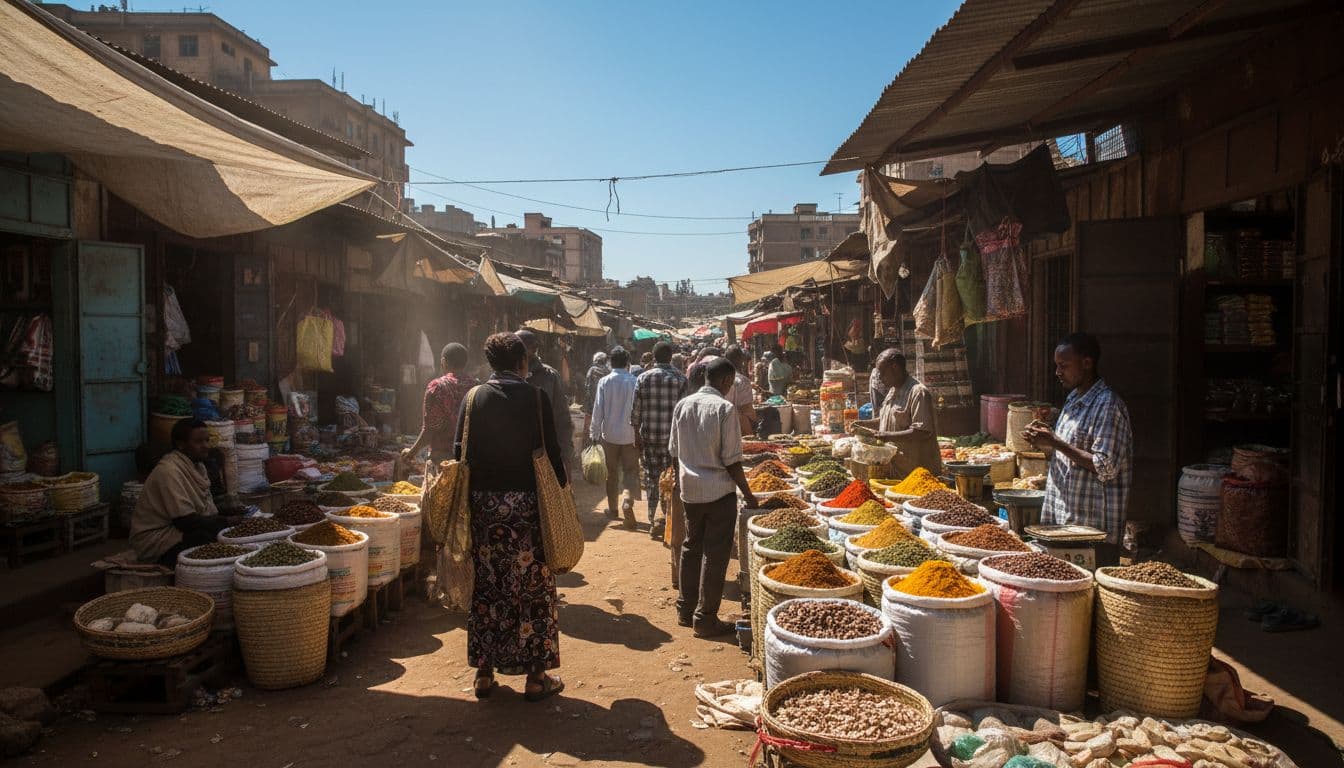
Street-level view of the vibrant Mercato market in Addis Ababa, Ethiopia, with vendors selling colorful spices under a sunny sky and 5-6 people shopping.### The Northern Circuit highlights, Lalibela, Gondar, Lake Tana, and the Simien Mountains

The classic first trip is the Northern Circuit, and it works because each stop has a clear "why."

Lalibela is all about the rock-hewn churches, carved down into the earth like architecture turned inside out. Gondar adds castles and royal history. Bahir Dar and Lake Tana bring boat trips to island monasteries, and the Blue Nile Falls can be worth it when water levels and access cooperate. Then the Simien Mountains deliver dramatic escarpments, fresh air, and wildlife like geladas.

Domestic flights can save your trip. Roads can be slow, and long drives stack up fast. If you're short on time, fly between Addis, Bahir Dar, Gondar, and Lalibela, then use local drivers for day trips. In the Simiens, plan for the usual park setup, which often includes an armed scout and required local support.

Iconic rock-hewn churches of Lalibela carved into red cliffs under a clear blue sky, wide landscape view with few distant pilgrims on paths in natural daylight.Dramatic cliffs and valleys in Ethiopia's Simien Mountains feature a small group of gelada baboons on a grassy plateau, with a single hiker visible on the trail in the distance under golden hour sunlight.### Optional adventure add-on, Danakil Depression, what it's like and who should skip it

Danakil is raw and intense. Expect extreme heat, basic camping, and guided 2 to 3 day tours. People go for Erta Ale's volcano and the surreal colors around Dallol, usually by 4WD convoy with a reputable operator. It's not a casual add-on, and it's not where you want to "figure it out as you go."

Skip it if:

  • You struggle in heat or have health concerns made worse by heat.
  • Your schedule is tight and you can't afford delays.
  • You prefer comfortable hotels and easy logistics.

A gentler swap is adding nights in Addis or the north, or slipping in a southern lake town like Awassa if your flights and time allow.

Sample 7 to 10 day Ethiopia itinerary for first-time visitors

Here's a realistic structure that keeps the pace manageable:

  • Days 1 to 2: Addis Ababa (museum, cathedral, coffee, logistics day)
  • Day 3: Fly to Bahir Dar (Lake Tana boat trip)
  • Day 4: Gondar (castles and historic sites)
  • Days 5 to 6: Simien Mountains (short trek or scenic hikes with park team)
  • Day 7: Fly to Lalibela
  • Day 8: Lalibela (churches, plus a slower afternoon)
  • Days 9 to 10: Optional Danakil, or a buffer day and return to Addis

Two rules keep stress low: build one buffer day for flight or road changes, and don't move every single day if you want a calmer trip.

Getting around, costs, money, packing, and cultural etiquette that helps you fit in

Transportation in Ethiopia, flights vs minibuses vs private drivers

Domestic flights are the fastest way to cover the northern route, especially in peak season. Book key legs early and double-check luggage limits, since smaller allowances can surprise first-timers.

Minibuses cost less, but they can be crowded and slow. A private car with a driver costs more, yet it's often easier for comfort and for safer night arrival planning. For Simien and Danakil, organized tours or structured park logistics usually make the most sense.

Money, budgets, and paying for things day to day

Ethiopia uses the Ethiopian Birr (ETB). ATMs are most reliable in larger cities like Addis Ababa, and card acceptance drops fast outside major hotels. Bring some USD or EUR cash for exchange, and keep small bills for tips and markets.

Daily costs vary by style, but a practical range for many first-time visitors is budget travel at about $50 to $90 per day, and mid-range travel at about $100 to $200 per day, before big extras. The biggest trip costs tend to be domestic flights, multi-day trekking support, and Danakil-style tours.

What to pack and what to wear, from highland nights to hot lowlands

Think in layers. Bring a light base layer, a warm evening layer for highlands, and comfortable walking shoes (or hiking boots for Simien). Add sun protection, a simple rain shell in shoulder months, a power bank, and plug adapters (Type C and F are common). Insect repellent and basic meds help, and a scarf or modest wrap makes church visits easier.

Keep valuables simple. A crossbody bag that zips beats a back pocket every time.

Food and cultural etiquette, coffee ceremonies, church rules, and photo manners

Ethiopian food is hearty and social. Try injera with stews (doro wat is a classic), tibs, and the many lentil and veggie dishes that make eating well easy. Coffee culture runs deep, so say yes when someone offers a ceremony.

Use your right hand for eating or greeting when possible. Dress modestly at religious sites, remove shoes where required, and ask before photographing people. If you don't love heat, request milder dishes and go easy on extra berbere until you learn your comfort level.

Conclusion

A great first trip to Ethiopia comes from a few smart choices: travel in the easier weather window (often October to March), confirm visa rules and current advisories right before departure, and build a north-focused route with a buffer day. Decide early whether Danakil truly fits your time, health, and comfort level.

Most importantly, slow down enough to enjoy the small moments, especially coffee ceremonies and conversations. Hire local guides when needed, follow local updates, and let Ethiopia surprise you in the best ways.

Wednesday, March 4, 2026

2026, High Oil Price Cuts Demand, What We're Seeing Across the World and Africa

In 2026, High Oil Price Cuts Demand, What We're Seeing Across the World and Africa

Oil price high 2026


When oil price moves up fast, daily life changes just as fast. In March 2026, we're seeing petrol costs climb again, so households drive less, businesses trim deliveries, and some trips get pushed to "later."

Recent news signals point to sharp spikes tied to geopolitics, with Brent swinging up into the upper $70s and low $80s per barrel in late February into early March. At the same time, several forecasts still point to softer 2026 averages, including outlooks that sit near the low $60s for Brent, because supply growth could cool prices if tensions ease.

In this post, we'll break down what's pushing price and demand in the world, why the response looks different across Africa, and what it means for commuting, food costs, power, and transport. We'll also flag the practical indicators to watch next, so we're not guessing week to week.

What realtime news in March 2026 says about oil prices and the risk of demand falling

Oil in africa 2026

World oil high price 2026


Why ia oil high

Oil in africa and usa


March 2026 news is giving us two stories at once. In the short 

run, oil price moves react to fear, headlines, and shipping risk, so we can see sudden jumps. Over the full year, many forecasts still point to a calmer average, because supply growth looks strong while demand growth looks slower across the world.

This split matters for Africa and everywhere else because pump prices follow the spike first, not the year's average. When crude jumps, fuel costs rise fast, and people cut back fast.

Why prices can jump even if the year's average is expected to be lower

When traders talk about a risk premium, we can think of it like paying extra for an umbrella because storm clouds show up, even if the forecast says most days will be sunny. In March 2026, tension risk (including U.S.-Iran headlines) has been one of those storm clouds. Even the chance of disruption can push prices up because buyers and sellers rush to protect themselves.

A few simple forces can lift prices quickly:

  • Supply fears: If markets think barrels could go missing, they bid up the next available barrels.
  • Shipping risk: If a key route looks unsafe, delivery takes longer and costs more, so prices jump.
  • Sanctions headlines: New limits can reshuffle flows overnight, even if total supply does not collapse.
  • Trader sentiment: When people expect others to buy, they buy first, and the move feeds itself.

Still, those spikes often fade when the market checks the basics. Many 2026 outlooks cluster around roughly $58 to $64 per barrel for Brent, with a higher outlier near $72 tied to higher geopolitical risk. We should treat that outlier carefully because it depends on events that may not happen, or may not last.

For consumers, the key point is timing. A two-week spike can raise petrol costs even if the annual average ends up lower, because refineries, importers, and retailers reprice quickly to avoid selling at a loss.

Takeaway: Spikes are about fear and uncertainty, averages are about barrels and budgets.

The supply and demand math behind 2026 expectations

A lot of analysts are modeling 2026 as a year where world supply grows faster than world demand. Put simply, if we add more new barrels than new drivers and factories can absorb, extra oil builds in storage. Those rising stockpiles act like a buffer, and they tend to cap prices after spikes.

Based on March 2026 reporting and major outlooks, the story looks like this:

  • Demand growth slows: Global demand still rises, but at a more modest pace (around 0.9 million barrels per day in several outlooks).
  • Supply growth stays strong: New output from the U.S., Brazil, and Guyana adds meaningful volume.
  • OPEC+ becomes the swing factor: The group can add barrels, pause increases, or cut to prevent a large surplus, especially if prices slide.

At the same time, geopolitics can tighten conditions for a moment, which is why we can see Brent trade in the upper $70s or low $80s during a hot news cycle. However, if the underlying balance points to a surplus (some estimates suggest 2 to 3 million barrels per day), the market often pulls prices back once headlines cool.

For Africa, this balance still hurts in the short term. Many countries import refined fuels and pay in dollars, so a brief jump in crude, freight, or insurance can show up as higher pump prices quickly. Over time, if extra supply keeps building, it can ease the pressure, but households and transport businesses feel the spikes first, and that is where demand starts to crack.

Monday, February 23, 2026

Facebook Content Monetization in 2026: Tips

Facebook Content Monetization in 2026: Tips & Tricks how to start earning

Facebook Content Monetization in 2026: Tips & Tricks how to start earning

As creators, we're always on the lookout for new ways to turn our passion into a profitable venture. Facebook content monetization has emerged as a lucrative opportunity, allowing us to earn money from our content.

how to get monetized for content monetization  in facebook 2026

In 2026, the landscape of Facebook content monetization is expected to evolve, with new tips and tricks emerging to help creators maximize their earnings. By understanding the strategies and best practices for monetizing our Facebook presence, we can stay ahead of the curve and achieve success.

To enhance your monetization strategies, we encourage you to apply now for training at traderslimitedcompany@gmail.com.

Key Takeaways

  • Understanding Facebook's monetization policies
  • Creating engaging content for monetization
  • Strategies for growing your Facebook page
  • Best practices for monetizing your Facebook presence
  • Staying up-to-date with the latest trends in Facebook content monetization

The Current State of Facebook Monetization

As we dive into 2026, the landscape of Facebook monetization is undergoing significant changes. The platform continues to evolve, offering content creators new opportunities to monetize their content. We will explore the key changes in Facebook's monetization landscape and why 2026 presents unique opportunities for content creators.

Key Changes in Facebook's Monetization Landscape

Facebook's monetization policies have undergone substantial updates in 2026. The platform has introduced new features such as enhanced in-stream ads and improved fan subscription models. These changes aim to provide creators with more flexible and lucrative monetization options. For instance, the updated policies now allow for more diverse content types to be monetized, including live streams and short-form videos.

https://www.youtube.com/watch?v=bpNVB_SsisI

Feature 2025 2026
In-stream Ads Limited to long-form videos Available for all video content
Fan Subscriptions Basic model with limited tiers Enhanced model with multiple tiers

Why 2026 Presents Unique Opportunities for Content Creators

The year 2026 presents unique opportunities for content creators due to Facebook's continued focus on creator-centric features. With the introduction of new tools and policies, creators can now diversify their revenue streams and engage more effectively with their audiences. For example, the enhanced fan subscription models allow creators to offer exclusive content to their loyal followers, thereby increasing their earning potential.

Moreover, Facebook's algorithm updates in 2026 prioritize high-quality, engaging content, giving creators a fair chance to reach a wider audience. By leveraging these changes, content creators can maximize their earnings and build a sustainable presence on the platform.

Understanding Facebook's Content Monetization Ecosystem in 2026

As we dive into Facebook's content monetization ecosystem in 2026, it's essential to understand the various strategies available to UK creators. Facebook continues to evolve its platform to provide more opportunities for creators to earn revenue from their content.

Available Monetization Methods for UK Creators

UK creators can leverage several monetization methods on Facebook, including in-stream ads, brand collaborations, and fan subscriptions. Each method has its own set of requirements and benefits. For instance, in-stream ads allow creators to earn money from short ads displayed during their videos.

A vibrant and professional digital workspace depicting "Facebook Monetization Methods" for content creators in 2026. In the foreground, a diverse group of four individuals in business casual attire, engaged in a brainstorming session around a modern conference table laden with laptops, tablets displaying Facebook analytics, and printed reports showcasing monetization strategies. In the middle ground, infographics illustrating various monetization methods like ad revenue, subscriptions, and digital tips are pinned to a whiteboard, along with the brand logo "learn side hustles". The background features a sleek office environment with large windows letting in soft, natural light, casting a warm glow over the scene. The mood is collaborative and motivational, emphasizing innovation and teamwork in digital content creation. Use a wide-angle lens to capture the dynamic setup, ensuring clarity and focus.

Comparing Revenue Potential Across Different Options

To maximize earnings, creators need to understand the revenue potential of each monetization method. The table below compares the average earnings potential for different methods:

Monetization Method Average Earnings Potential Requirements
In-Stream Ads £500-£1,500 per month 1,000 followers, 60,000 minutes viewed
Brand Collaborations £1,000-£5,000 per post High engagement, niche audience
Fan Subscriptions £500-£2,000 per month 1,000 followers, consistent content

By understanding these options and their potential, UK creators can develop effective monetization strategies for Facebook that align with their content and audience.

How to Get Monetized for Content Monetization in Facebook 2026

Monetizing content on Facebook in 2026 involves a multi-step process that begins with meeting the platform's eligibility criteria. To succeed, creators must understand and follow these steps carefully.

A modern office scene depicting the concept of Facebook content monetization in 2026. In the foreground, a diverse group of three professionals—two women and one man—are intently discussing strategies while looking at a laptop screen displaying analytics and engagement graphs. They are dressed in smart casual attire, with elements reflecting creativity and approachability. In the middle ground, a vibrant workspace filled with motivational posters and visual aids related to digital monetization and success stories. The background features a large window with soft daylight streaming in, creating an optimistic and productive atmosphere. Include subtle branding elements with the words "learn side hustles" strategically positioned, ensuring consumer trust and engagement. The image should evoke a sense of collaboration, creativity, and future-oriented thinking in the realm of online income generation.

Step 1: Meeting the Updated Eligibility Requirements

To be eligible for Facebook content monetization, creators must comply with the platform's updated policies. This includes having a minimum number of followers, meeting specific engagement thresholds, and adhering to community standards. We will outline these requirements in detail to help you prepare.

Step 2: Preparing Your Account for Approval

Once you've met the eligibility requirements, the next step is to prepare your Facebook account for the monetization application process. This involves ensuring your profile is complete, your content is high-quality, and your engagement strategies are effective. We recommend reviewing Facebook's guidelines to avoid common pitfalls.

Step 3: Submitting Your Application Successfully

The final step is submitting your application for Facebook content monetization. To increase your chances of approval, make sure your application is thorough and accurate. This includes providing necessary documentation, demonstrating compliance with Facebook's policies, and showcasing your content's value to your audience.

By following these steps, creators can successfully navigate Facebook's content monetization process in 2026 and start earning from their content.

Building Your Monetization-Ready Facebook Presence

Establishing a monetization-ready Facebook presence requires careful planning and execution. To succeed, we must focus on creating a robust and engaging environment that attracts and retains UK audiences.

Creating Content That Attracts UK Audiences

To attract UK audiences, our content must be relevant, high-quality, and tailored to their interests. We should utilize Facebook monetization tips such as using trending topics, incorporating local events, and creating content that resonates with UK culture.

A vibrant and engaging illustration showcasing best practices for monetizing content on Facebook. In the foreground, feature a diverse group of three individuals in professional business attire, engaging with their devices, discussing strategies. One person is pointing at a smartphone displaying the "learn side hustles" brand symbol. In the middle ground, include a lively workspace with a laptop, paperwork, and screens displaying graphs and icons related to monetization metrics. The background should hint at a modern office setting with large windows and natural light streaming in, creating a warm atmosphere. The scene conveys optimism and collaboration, reflecting a future-focused mindset on digital earnings. The angle should be a slightly elevated view, allowing the viewer to see the interactions clearly while capturing the bustling environment.

Understanding the preferences of our target audience is crucial. We can achieve this by analyzing engagement metrics and adjusting our content strategy accordingly.

Engagement Strategies That Boost Monetization Potential

Effective engagement strategies are vital for boosting our monetization potential. This includes interacting with our audience through comments, using Facebook Live, and creating content that encourages sharing and discussion.

Engagement Strategy Description Benefit
Interactive Content Polls, quizzes, and questions Increased audience participation
Facebook Live Real-time video streaming Enhanced audience engagement
Responsive Communication Timely responses to comments Improved audience retention

By implementing these strategies, we can significantly enhance our content monetization on social media efforts and achieve greater success on Facebook.

Content Creation Strategies for Maximum Revenue

As we navigate the evolving Facebook ecosystem, understanding content creation strategies becomes increasingly important for revenue maximization. To succeed, creators must adapt to the platform's changing landscape and leverage the most effective content formats.

To achieve maximum revenue, it's crucial to focus on high-converting content formats that resonate with your audience. Let's explore some of the most effective content types for 2026.

High-Converting Content Formats for 2026

In 2026, Facebook creators can capitalize on several high-converting content formats to boost their earnings. These include:

  • Short-form videos: Engaging, bite-sized content that captures viewers' attention.
  • Live streaming: Real-time interaction with your audience, fostering a sense of community.
  • Interactive content: Polls, quizzes, and challenges that encourage audience participation.
  • Storytelling: Compelling narratives that connect with your audience on an emotional level.

By incorporating these formats into your content strategy, you can increase engagement and, ultimately, revenue.

A vibrant and professional workspace depicting a content creation strategy for monetizing Facebook in 2026. In the foreground, a diverse group of three individuals in professional business attire brainstorm ideas around a sleek table, with laptops open, showcasing data analytics and social media metrics. The middle layer features a whiteboard filled with colorful diagrams and strategies titled "Learn Side Hustles," illustrating concepts like audience engagement and revenue streams. In the background, a bright, modern office with large windows allowing natural light to pour in, creating an energetic and optimistic atmosphere. The scene captures the essence of collaboration and innovation, focusing on building trust and engaging content strategies. The angle is slightly above eye level, emphasizing both the brainstorming session and the creative environment.

Content Planning Calendar for Consistent Earnings

A well-structured content planning calendar is essential for maintaining consistency and maximizing earnings on Facebook. Here's a simple table to help you plan your content:

Content Type Frequency Target Audience
Short-form videos 3 times a week UK-based audience
Live streaming Once a week Engaged followers
Interactive content Twice a week Broad audience

By planning your content in advance, you can ensure a consistent stream of engaging posts that attract and retain your audience, ultimately leading to increased revenue.

Mastering Facebook's Advanced Monetization Features

To stay ahead in the competitive landscape of Facebook content creation, understanding and leveraging advanced monetization features is essential. As we explore these features, we'll uncover how they can significantly boost your earnings in 2026.

A vibrant and engaging digital scene showcasing advanced monetization features of Facebook in 2026. In the foreground, depict a diverse group of professionals in smart business attire, analyzing data on sleek laptops and tablets, with visible proofs of transactions and dashboards on their screens. The middle ground features an interactive presentation screen displaying dynamic graphs and icons representing revenue streams like subscriptions, ad revenues, and fan donations. In the background, illustrate a modern office environment with glass walls, blue and green lighting, and plants, creating a productive atmosphere. Capture the mood of innovation and collaboration, emphasizing trust and financial growth. The brand "Learn Side Hustles" subtly integrated into design elements, showcasing an encouraging and professional vibe.

Setting Up In-Stream Ads for Optimal Performance

In-stream ads are a powerful tool for monetizing your Facebook content. To set them up for optimal performance, focus on creating engaging videos that can be interrupted by ads. This not only increases your earnings but also enhances viewer engagement. Ensure your content complies with Facebook's monetization policies to avoid any violations.

Leveraging Subscription Models and Fan Contributions

Subscription models and fan contributions offer a more direct way to earn money from your most dedicated followers. By providing exclusive content or rewards, you can encourage fans to support you financially. This model not only provides a steady income stream but also fosters a closer connection with your audience.

Utilizing Facebook's Marketplace and Shop Features

Facebook's Marketplace and Shop features allow you to sell products directly to your audience, providing another revenue stream. Whether you're selling physical goods or digital products, these features make it easy to integrate e-commerce into your content strategy. Ensure your products are well-presented and your shop is optimized for a seamless customer experience.

By mastering these advanced monetization features, you can diversify your income streams and maximize your earnings on Facebook in 2026. Stay ahead of the curve by continually optimizing and adapting your strategies.

Navigating Facebook's Monetization Policies in 2026

Navigating the complexities of Facebook's monetization policies is key to success in 2026. As creators, we must stay informed about the latest regulations and guidelines to ensure compliance and maximize our earnings.

A visually engaging and professional illustration of Facebook's monetization policy for 2026, focusing on trust and credibility. In the foreground, a laptop displaying a detailed dashboard of monetization statistics, surrounded by proof of payments in an organized manner. The middle layer features a group of diverse professionals in business attire discussing strategies, with facial expressions conveying determination and insight. The background showcases a modern office setting, with large windows letting in bright, natural light that enhances a vibrant atmosphere. Incorporate the brand "Learn Side Hustles" subtly on a sticky note on the laptop. Use a wide angle lens to capture the collaborative interaction and an inviting mood that inspires readers to explore monetization opportunities.

Understanding UK-Specific Regulations

The UK has its own set of regulations that Facebook creators must adhere to. Understanding these UK-specific regulations is crucial for maintaining compliance. For instance, creators must be aware of the Digital Markets, Competition and Consumers Act and how it impacts their content.

Regulation Description Impact on Creators
Digital Markets, Competition and Consumers Act Regulates digital markets and consumer protection Requires transparency in advertising and content
Data Protection Act Protects user data and privacy Ensures secure handling of user information

Avoiding Common Policy Violations That Affect Earnings

Policy violations can significantly impact earnings. Common violations include copyright infringement and misleading content. To avoid these, creators should focus on producing high-quality, original content and ensure transparency in their advertising practices.

By understanding and adhering to Facebook's monetization policies, UK creators can maintain compliance and optimize their earnings potential.

Implementing Multiple Revenue Streams for Maximum Earnings

To maximize earnings on Facebook, it's crucial to implement multiple revenue streams. By diversifying your income sources, you can reduce financial risk and increase overall revenue potential. In 2026, Facebook's evolving monetization landscape offers creators numerous opportunities to earn money through various channels.

Combining On-Platform Monetization Methods

Facebook provides several on-platform monetization methods that can be combined for maximum earnings. These include in-stream ads, fan subscriptions, and branded content partnerships. By leveraging these options together, creators can significantly boost their revenue. For instance, using in-stream ads during live videos and partnering with brands for sponsored content can create a robust income stream.

Monetization Method Earning Potential Key Benefits
In-Stream Ads High Easy to implement, wide reach
Fan Subscriptions Medium to High Encourages community engagement, predictable income
Branded Content High Aligns with brand values, significant one-off payments

Integrating Off-Platform Opportunities with Facebook Content

Integrating off-platform opportunities with your Facebook content can further diversify your revenue streams. This can include driving traffic to your website or online store, promoting your YouTube channel, or selling merchandise. By cross-promoting your content across platforms, you can maximize your earning potential. For example, sharing your YouTube videos on Facebook can drive traffic to your YouTube channel and increase your ad revenue there.

"The key to successful monetization is diversification. By spreading your efforts across multiple platforms and revenue streams, you can build a more resilient and profitable business."

A vibrant, professional workspace depicting multiple revenue streams for content creators. In the foreground, a well-dressed individual, male or female, is seated at a modern desk with a laptop open, showing graphs and analytics. To the side, various digital devices display platforms like social media, streaming, and e-commerce. In the middle ground, infographics illustrating diverse income sources, such as ad revenue, subscriptions, and merchandise sales, float around like bubbles. The background features a large window with a bright, sunny day outside, casting warm light across the room, enhancing a feeling of optimism and productivity. The image should embody a positive, motivational atmosphere, symbolizing success and growth in the digital economy, and should include the brand "learn side hustles" subtly integrated within the workspace design.

By combining on-platform monetization methods and integrating off-platform opportunities, Facebook creators can achieve maximum earnings and build a sustainable business model.

Analytics and Optimization for Facebook Monetization

In the ever-evolving landscape of Facebook monetization, analytics are key to staying ahead. As content creators, we must leverage data to refine our strategies and maximize revenue.

Key Metrics to Track for Revenue Growth

To optimize our Facebook monetization efforts, we need to focus on key performance indicators (KPIs) that directly impact revenue. These include engagement rates, video views, and earnings per 1,000 views (EPM). By monitoring these metrics, we can identify areas for improvement and adjust our content strategy accordingly.

For instance, a high engagement rate might indicate that our content resonates well with our audience, while a low EPM could suggest that our monetization methods need optimization.

Using Data to Refine Your Monetization Strategy

Data analysis is crucial for refining our monetization strategy on Facebook. By examining our performance data, we can identify trends, capitalize on successful content formats, and adjust our approach to better meet our audience's preferences. As the saying goes, "The key is not to prioritize what's on your schedule, but to schedule your priorities." Effective use of analytics allows us to prioritize our efforts for maximum revenue growth.

A professional workspace showcasing Facebook Monetization Analytics. In the foreground, a sleek laptop is open displaying colorful graphs and charts that illustrate monetization metrics, insights, and performance trends. Next to it, a smartphone is visible, with the Facebook app open and showcasing earnings notifications. The middle layer features a diverse group of business professionals, dressed in smart business attire, analyzing data together and discussing strategies for optimization. In the background, a modern office with soft overhead lighting and glass walls creates an inviting atmosphere. A large digital screen displays the brand name "learn side hustles," prominently but without clutter. The overall mood is focused and collaborative, emphasizing the importance of analytics in enhancing monetization efforts. The scene captures a balance of professionalism and innovation, perfect for illustrating the concepts of analytics and optimization in Facebook content monetization.

By integrating insights from our analytics into our content creation process, we can create a more effective monetization strategy that drives revenue and growth on Facebook.

Accelerate Your Success: Professional Training Options

In the ever-evolving landscape of Facebook content monetization, staying ahead requires more than just basic knowledge. As creators, we need to continually adapt and improve our strategies to maximize our earnings.

A professional training session focused on Facebook monetization, featuring a diverse group of individuals engaged in interactive discussions around a large screen displaying quality graphs and successful case studies. In the foreground, a confident female trainer in smart casual attire presents insights, while attendees take notes and network. The middle area shows a modern classroom equipped with laptops and digital devices, emphasizing a collaborative learning environment. In the background, a large window reveals a bright and inspiring cityscape, suggesting opportunity and growth. The lighting is bright and inviting, enhancing the productivity atmosphere, captured from a slightly elevated angle to encompass the entire room. Include subtle branding elements of "learn side hustles" visible on materials, ensuring a professional, motivated mood throughout the setting.

Why Specialized Training Can Fast-Track Your Earnings

Investing in professional training can significantly boost your Facebook monetization success. By learning from experienced professionals, you can gain insights into the latest trends and best practices, allowing you to stay ahead of the competition.

Specialized training programs, such as those offered by Traders Limited Company, provide comprehensive guidance on creating engaging content, optimizing ad performance, and leveraging Facebook's advanced features.

Traders Limited Company's Facebook Monetization Program

Traders Limited Company's Facebook Monetization Program is designed to equip creators with the knowledge and skills needed to succeed in the ever-changing world of Facebook content monetization. This program covers a range of topics, from content creation strategies to advanced monetization techniques.

How to Apply: Send Your Application to traderslimitedcompany@gmail.com

To take advantage of this valuable training opportunity, simply send your application to traderslimitedcompany@gmail.com. Our team will guide you through the enrollment process and provide you with access to our comprehensive training materials.

Don't miss out on this chance to accelerate your success on Facebook. Apply now to start your journey towards maximizing your earnings through professional training.

Conclusion: Your Roadmap to Facebook Monetization Success in 2026

As we navigate the evolving landscape of Facebook content monetization, it's clear that 2026 presents unique opportunities for creators. By understanding Facebook's content monetization ecosystem and leveraging available monetization methods, UK creators can unlock new revenue streams.

Our journey through the world of Facebook monetization has highlighted the importance of building a strong presence, creating high-converting content, and mastering advanced monetization features. By applying these strategies and tips, creators can achieve monetization success and maximize their earnings.

The key to facebook content monetization lies in diversifying revenue streams, utilizing analytics to refine your strategy, and staying up-to-date with the latest policies and regulations. By following this roadmap to success, you'll be well on your way to achieving your monetization goals on Facebook.

As we move forward, it's essential to stay focused on creating engaging content, adapting to changes in the Facebook algorithm, and exploring new opportunities for growth. With persistence and dedication, creators can turn their passion into a profitable venture, achieving long-term success on the platform.

FAQ

What are the eligibility requirements for Facebook content monetization in 2026?

To be eligible for Facebook content monetization in 2026, we need to meet the updated requirements, which include having a certain number of followers, meeting specific content guidelines, and complying with Facebook's monetization policies.

How do we prepare our Facebook account for monetization approval?

To prepare our Facebook account for monetization approval, we need to ensure that our account is in good standing, our content meets Facebook's guidelines, and we have the necessary documentation ready, such as tax information and identification.

What are the best content creation strategies for maximizing revenue on Facebook?

To maximize revenue on Facebook, we can use high-converting content formats, such as video content, and create a content planning calendar to ensure consistent earnings. We can also leverage engagement strategies, such as responding to comments and using Facebook's interactive features.

How do we avoid common policy violations that affect earnings on Facebook?

To avoid common policy violations that affect earnings on Facebook, we need to understand Facebook's monetization policies, including UK-specific regulations, and ensure that our content complies with these policies. We can also stay up-to-date with Facebook's policy updates and adjust our content accordingly.

Can we combine on-platform monetization methods with off-platform opportunities on Facebook?

Yes, we can combine on-platform monetization methods, such as in-stream ads and subscription models, with off-platform opportunities, such as affiliate marketing and sponsored content, to maximize our earnings on Facebook.

What are the key metrics to track for revenue growth on Facebook?

To track revenue growth on Facebook, we need to monitor key metrics, such as engagement rates, video views, and earnings per 1,000 views. We can use Facebook's analytics tools to track these metrics and refine our monetization strategy accordingly.

How can we apply for Traders Limited Company's Facebook Monetization Program?

To apply for Traders Limited Company's Facebook Monetization Program, we can send our application to traderslimitedcompany@gmail.com, and we will receive guidance on the next steps to fast-track our earnings on Facebook.

What are the benefits of using Facebook's advanced monetization features?

Facebook's advanced monetization features, such as in-stream ads, subscription models, and Fan Contributions, can help us maximize our earnings on the platform. By leveraging these features, we can diversify our revenue streams and increase our overall earnings.